Some people think Carnaval is just a debaucherous four-day party in Rio de Janiero but the rest of Brazil would have to disagree. Months leading up to Fat Tuesday, even the tiny towns are constructing elaborate floats, practicing samba routines, and gearing up for this nationwide party. Beyond the grandstands of Rio (we’ll get to that after our stay this weekend), here our the look at Carnaval from the four weeks traveling the country through little beach towns to the colonial cities that started it all.
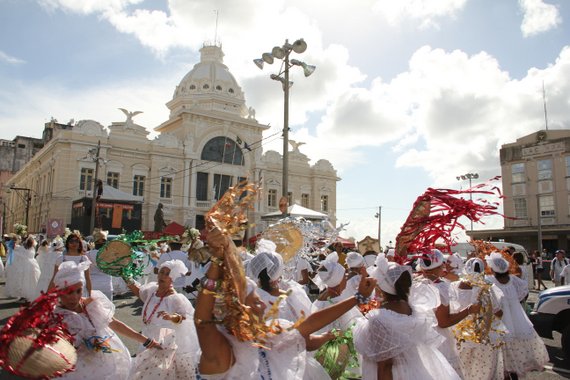
In Brazil it's all about attitude. Colors can never be too bright, clothes are never too tight, and self confidence pulls anything off. This piece of street art rules the block.Bright pinks, blues, yellows, greens... essentially the rainbow pumped up a notch is the palette of not just Carnaval but the whole of Brazil. Everything from houses to shops are in a vibrant coat of paint so when streamers of every color hang through the streets of Olinda for Carnaval, they perfectly complement the town.Over-the top frocks like this sweet pea dress are perfect for nights out and these Liberty of London (meets Brazil) style skirts are just the thing for a morning block party.Like Mardi Gras, reams of glitzy beads are essential to Carnaval style. This shop caters to the locals and can string up anything from their 100s of choices. Women wear a numb of strands around their neck and men tend to slip them through each arm to crisscross them over their chest.For sound and flair, colorful beads slip over gourds to create every neighborhod's percussion section. Even if you never gave these a shake they would look very global chic on a console table or bookshelf.Massive papier-mâché puppets modeled after local celebrities and political figures are the stars of the bloco. When worn on the shoulders of a puppet master as he saunters down the parade, the figure is the mark of that group's artistic talents and sense of humor.Girls take the streets with their resounding drums, and equally loud hair and makeup. Flowers are a running theme in clothes and accessories.Woven baskets encircled with metallic streamers become an essential prop for traditional Afro-Brazilian dances through the streets of Salvador.Sassed up with head scarves, bangles and some relentless dance moves, these ladies weren't going to leave the party to the kids. Flowing linen and lace dresses make for dramatic spins and a classic look.Classsic red blue and yellow umbrellas are a dancing essential in Pernambuco. For spins, jumps, pivots, they make every Frevo dance move more dazzling with their blur of primary colors.Leading this neighborhood bloco, these intricately beaded banners command the attention they deserve.
Has anyone ever been to Carnaval in Rio or seen photos? Though spectacular (we went to the Sambadromo last night), I was amazed by how different and incredibly charming the regional takes on the party different could be.
Manaus is the only city in the Amazon so if you have dreams of exploring the world’s biggest river and jungle housing the most species on the planet, you basically have to pass through this two-million person town. Originally, we thought of it as a stop-off to get to a jungle tour but found ourselves extending our stay to five days because were having such a good time. This largely credited to meeting the loveliest couple Debora and Mark upon arrival; they totally took us under their wing, showing us great local spots; otherwise, I would probably recommend three days here, two for exploring and one for resting after your multi-day jungle adventure.
For the full post, check it out on my husband and my around-the-world travel blog, HoneyTrek.com
The honeymoon has begun! The first stop on our around-the-world journey has landed us in Manaus, Brazil, the heart of the Amazon. It’s a 2-million person city in the depths of the jungle that can only be accessed by plane or the only highway in town, the Amazon River. Native Brazilians have obviously been living in the rainforest for centuries (more on jungle living later) but the Europeans that came flooding in during the late 1800s for its endless resources, namely the rubber trees, have given this town a very distinct character. The dream was to create “The Paris of the Amazon” with grand plazas, opera houses, and palaces and they succeeded… in their own quirky Amazonian way.
Here a look at Manaus nearly 90 years after the Rubber Boom, in new renaissance of sorts as they race to revitalize the town before their debut as host of World Cup 2014.
Houses crowd around the Amazon river; the lifeblood of town.The black and white waves of tiles in Sao Sabastiao Square symbolize the meeting of the Rio Negro and the milky waters of the Solimoes rivers that form the Amazon river, just north of Manaus. This is the original example of the design but the motif appears all over town.
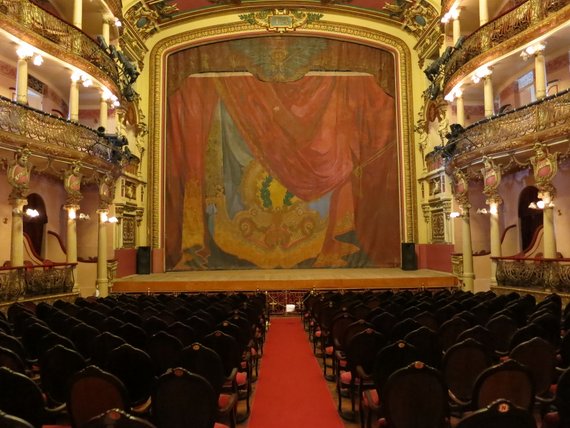
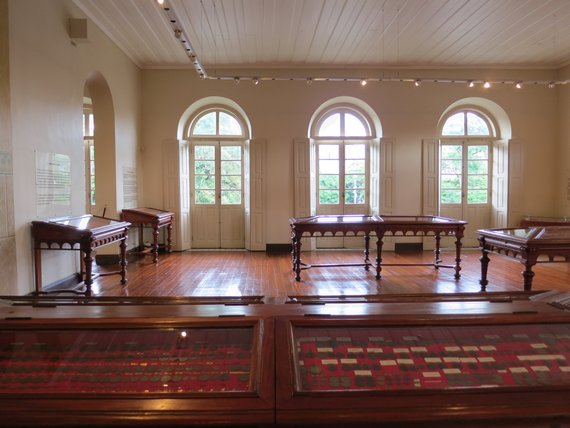
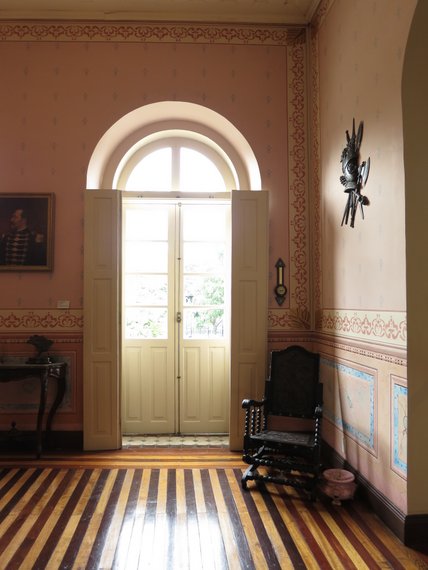
The pride and joy of Manaus, the Amazonas Opera House was built in 1882 at the height of the Rubber Boom.Sparing no expense, Italian designer Crispim do Amaral was commissioned to take on the 701-seat theater. Beyond the Venetian glass blown chandeliers and Rococo furniture shipped from France, he sent the local Brazilian wood across the ocean to be carved by the finest craftsman in Europe to ensure the theater had the best of the best.The Provincial Palace is made of a bunch of different smaller museums like this rare coin museum. The loose change didn't interest me much but I loved the antique display tables and loads of light flooding the arched windows.Loved this little corner of the Palace's private quarters for the trompe l'oeil walls and light and dark planks of wood...another nod to the meeting of the waters.Beyond the museums and landmarks, Manaus' beauty is in a dilapidated state but that's half its charm.Grand Art Nouveau atriums and regal neoclassical buildings mix with thatch roof for a city full of contrasts.
With Manaus hosting the World Cup in 2014 they are trying to spiff things up with 21st century designs and achievements like the Manaus-Irandubua Bridge--the second longest river bridge in the world and quite the steel stunner at that.
At a fateful happy hour almost two years ago, friends of Mike and mine told us they were taking a honeymoon around the world. Our jaws dropped to the floor then stuttered out, “What do you mean? Is that even possible?” They were just going to quit their jobs and go. The concept seemed unfathomable but yet affixed itself to our brains from that moment on.
Mike and my love for travel runs deep. With a mother who was a flight attendant all through her 20s and Mike’s parents who were known for their spontaneous ski trips to the Alps, we were taught traveling is an essential part of living. In our five years of dating, we’ve been to nine countries and have constantly been thinking, where next? So when it came to picking a place for our honeymoon, we knew one exotic beach wasn’t going to satisfy this case of wanderlust.
So as of January 2012, Mike and I are starting our one and half year honeymoon around the globe. It’s crazy, we know -but if not now, when?
We’ve since updated this map and extended our trip by six months. The world is a big place!
The Honeymoon Itinerary
The plan is to go the places too far to visit while we have a job and too rugged to do when we’re old. That means neighboring Central America and cushy Europe, we’ll see you at a later date. South America, Africa, Asia, Australia, New Zealand—here we come!
To be honest, our itinerary right now is very rough, though this is what we know: The first leg starts in Brazil for Carnival, then loops down to Uraguay, around Argentina, up Chile and ending in Peru to hike Machu Pichu in May. Then my sister is having her first baby and my best friend is getting married so we’ll be returning to the U.S. for a couple weeks. By June we are off to South Africa, Zambia, Tanzania, Kenya, and Madagascar, followed by a slow tour through Asia to Tibet, Nepal, China, Japan, Laos, Cambodia, Vietnam, Indonesia, Malaysia, and ending in the South Pacific with Australia, New Zealand, then home by May of 2013.
Though we’ll be tightening up our plan over the next 40 days, we don’t want to let any one route bog us down. You never know what you’ll find out there so you need to keep a little wiggle room for spontaneous inspiration.
SeeingDesign Abroad
When choosing names for this blog, SeeingDesign struck me for its global possibilities. The prospect of actually seeing and chronicling design around the world gave it potential that, when the time was right, I knew I would seize it. So akin to my past coverage of boutique hotels, design shops, architecture, chic finds around the U.S., it’s about to get a whole lot more interesting abroad.
A few SeeingDesign column ideas I’m scheming.. Design in Five: A round up of each country’s most unique, exquisite, exotic, bizarre, and charming products. Architecture Tours: From huts to high-rises, a visual review of what’s home in farflung places. Artisan Spotlight: Interviews with different local artisans about their lives and crafts. Hotel Envy: The review of the best design hotels we stay in and the ones we would die to check-in to. Market of the Month: A close look at the some of the coolest bazaars and flea markets around the world.
HoneyTrek.com
And for all non-design related adventures —hiking, beaching, dining, volunteering, etc.—Mike and I will be keeping a joint blog called HoneyTrek.com. Travel ideas, advice, mishaps, and musings will abound here. If this sounds like your kind of adventure, please head over to our blog and subscribe to the newsletter: http://HoneyTrek.com/Subscribe
It is going to be one heck of a journey—one of which we’d love you to participate in, from observing, commenting, to offering your suggestions, even requests!
 Some people think Carnaval is just a debaucherous four-day party in Rio de Janiero but the rest of Brazil would have to disagree. Months leading up to Fat Tuesday, even the tiny towns are constructing elaborate floats, practicing samba routines, and gearing up for this nationwide party. Beyond the grandstands of Rio (we’ll get to that after our stay this weekend), here our the look at Carnaval from the four weeks traveling the country through little beach towns to the colonial cities that started it all.